Circuit Breaker Repair
Rapid, certified diagnostic and repair solutions for buzzing, overheating, or malfunctioning circuit breakers across Sarasota County homes and businesses.
Explore Diagnostics & ServiceProtecting Sarasota homes and barrier island properties with precision circuit breaker repairs, rapid troubleshooting for constantly tripping breakers, and comprehensive electrical panel safety inspections.
Select your symptom below to understand the physical failure point and view dedicated repair protocols.
The switch handle springs immediately back to center or off when toggled, indicating an active short circuit or broken mechanical latch.
Tripping Solutions →Audible electrical arcing or 60Hz magnetic plate vibration caused by loose bus lugs or extreme thermal current overload.
Repair Protocols →One 120V phase leg has dropped or your double-pole main disconnect has burnt open, disabling all 240V appliances.
Phase Diagnostics →Microprocessor-based arc or ground-fault breakers tripping from motor noise, shared neutrals, or coastal humidity.
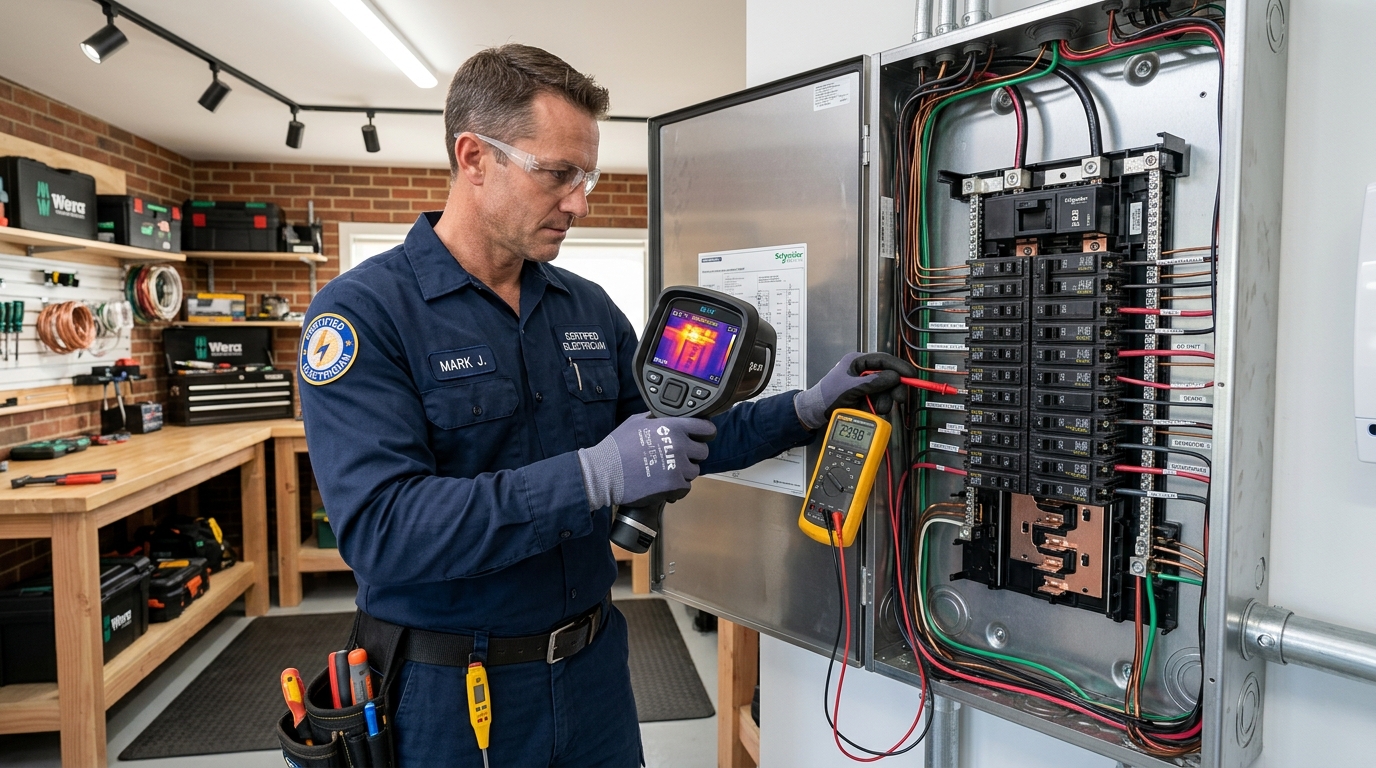
AFCI Diagnostics →Every electrical service is handled by skilled electricians using certified test equipment, infrared thermal cameras, and factory-correct replacement components.
Rapid, certified diagnostic and repair solutions for buzzing, overheating, or malfunctioning circuit breakers across Sarasota County homes and businesses.
Explore Diagnostics & ServiceUpgrade worn, defective, or obsolete circuit breakers with precision-matched, manufacturer-certified replacements engineered for Florida's high electrical demands.
Explore Diagnostics & ServiceTired of resetting the same breaker? We pinpoint whether circuit overload, short circuiting, or internal mechanism wear is causing your repeated breaker trips.
Explore Diagnostics & ServiceEliminate frustrating nuisance trips and restore advanced electrical fire defense with specialized Arc-Fault Circuit Interrupter (AFCI) diagnostic services.
Explore Diagnostics & ServiceProtect your household from dangerous electrical shock in wet areas. We troubleshoot, test, and repair GFCI breakers for pool pumps, outdoor docks, kitchens, and baths.
Explore Diagnostics & ServiceAdvanced multimeter and thermal imaging diagnostics to determine if a circuit breaker is weak, scorched, internally worn, or failing under normal electrical load.
Explore Diagnostics & ServiceSystematic evaluation of your entire breaker box to isolate loose neutral bars, corroded bus contacts, voltage imbalances, and erratic household electrical behavior.
Explore Diagnostics & ServiceDetailed 25-point breaker panel and electrical service safety inspections to protect your family, secure home insurance approvals, and identify hidden electrical hazards.
Explore Diagnostics & ServicePrevent dangerous wire overheating and nuisance shutdowns by calculating branch amperage loads and rebalancing heavy consumer devices across available circuits.
Explore Diagnostics & ServiceImmediate detection and repair of severe short circuits, melted wire insulation, and high-current electrical faults that cause instant breaker tripping and sparks.
Explore Diagnostics & ServiceWhen half your lights are off, 240V appliances stop working, or specific outlet strings go dead, we diagnose dropped service legs, open neutrals, and faulty bus feeds.
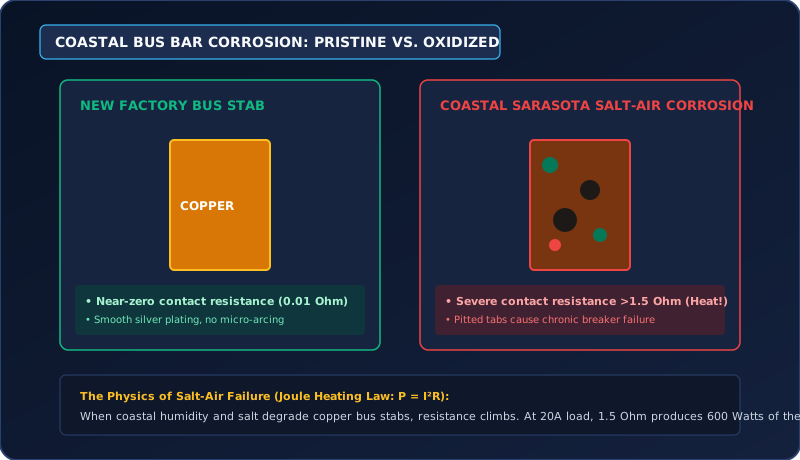
Explore Diagnostics & ServiceRestore your electrical panel without full service replacement. We repair pitted bus bars, re-torque lugs, replace main disconnects, and fix salt-air corrosion.
Explore Diagnostics & ServiceResidential circuit breakers are precision-calibrated electromechanical devices engineered to prevent catastrophic electrical fires by interrupting current flow before conductors reach combustion temperatures.
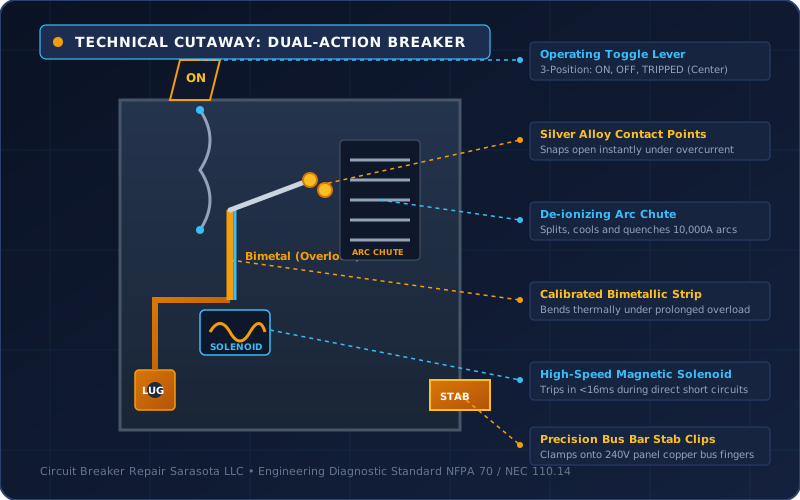
Modern thermal-magnetic breakers utilize two distinct physical trip mechanisms working in tandem:
In Sarasota, central air conditioning systems run for thousands of hours each year. Because electric motors draw up to five to seven times their running amperage during startup (known as locked-rotor inrush current), double-pole air conditioning breakers endure continuous thermal-magnetic cycling. Over time, the internal bimetallic elements become fatigued, causing the breaker to trip at progressively lower currents—a phenomenon known as thermal calibration drift.
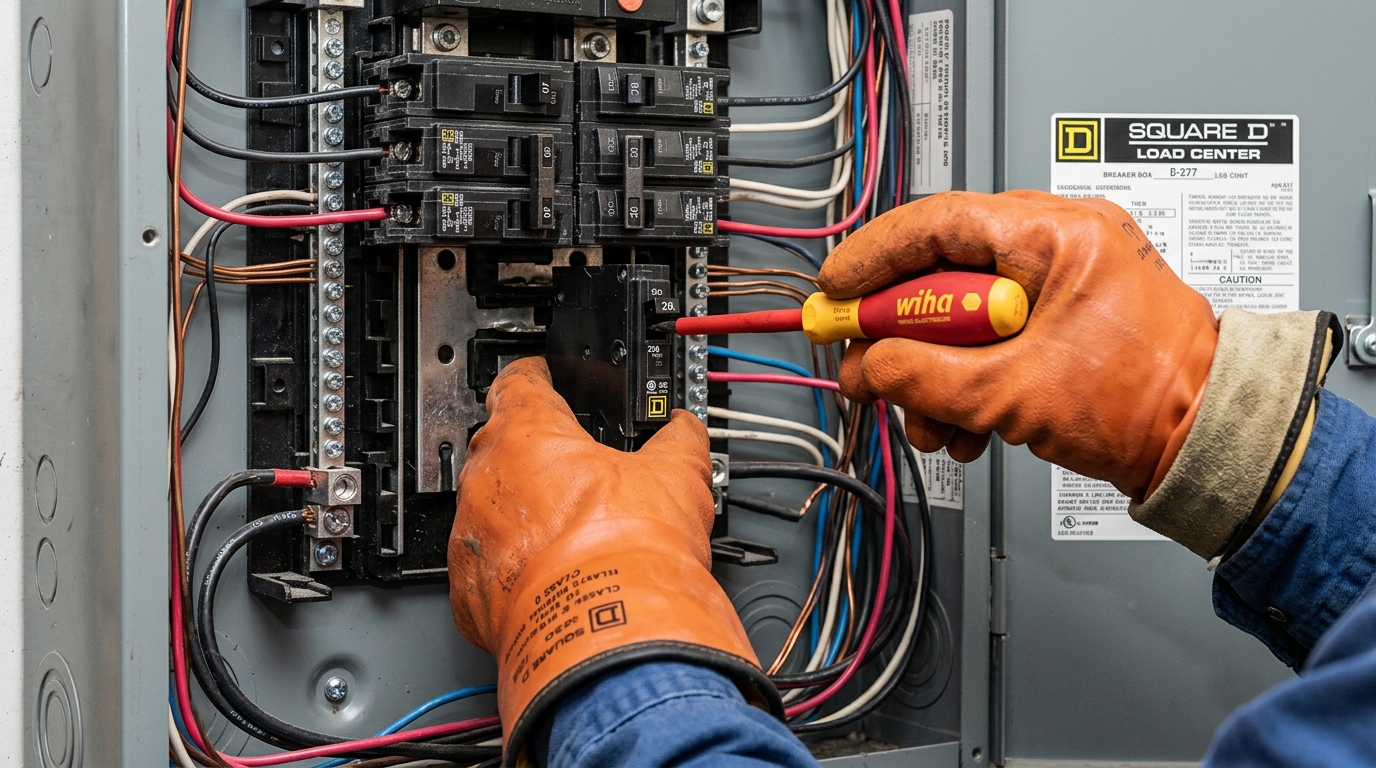
Understanding the differences between standard thermal-magnetic, AFCI, GFCI, and dual-function breakers in Sarasota residences.
| Breaker Classification | Trip Mechanism | Target Hazards | Required Locations (NEC & Florida Code) |
|---|---|---|---|
| Standard Thermal-Magnetic | Bimetallic strip & electromagnetic coil | Circuit overloads & high-current dead short circuits | Dedicated large appliance circuits (A/C, water heater, dryer, oven) |
| AFCI (Arc-Fault) | Microprocessor digital waveform analysis | Electrical arcing across damaged cords, loose terminals, pierced wires | Bedrooms, family rooms, living rooms, hallways, dens, closets |
| GFCI (Ground-Fault) | Differential toroidal current sensing transformer | Current leaking to ground, shock prevention, electrocution risk | Bathrooms, kitchens, garages, outdoor outlets, pool pumps, docks |
| Dual-Function (AFCI/GFCI) | Combined microprocessor arc & ground differential sensing | Simultaneous electrical fire prevention and life-safety shock defense | Modern kitchen branch circuits, laundry rooms, and dishwasher circuits |
We install authentic manufacturer-certified replacement breakers engineered with exact bus stab metallurgy to prevent dangerous micro-arcing and contact erosion.
QO 3/4-inch heavy-duty commercial/residential breakers with Visi-Trip flags and Homeline 1-inch standard residential format. Fully stocked on all service vans.
Industry-standard plug-in circuit breakers and space-saving tandem breakers featuring copper bus stab clips designed for Siemens load centers.
Both legacy classic Cutler-Hammer beige CH breakers (3/4-inch) and modern Eaton Type BR (1-inch) classified replacements installed to NEC torque specs.
THQL and THQP thin-series 1/2-inch and 1-inch circuit breakers matched to residential GE PowerMark Plus electrical distribution panels.
We provide localized diagnostics tailored to the specific housing stock, panel ages, and coastal environmental demands of each Sarasota community.
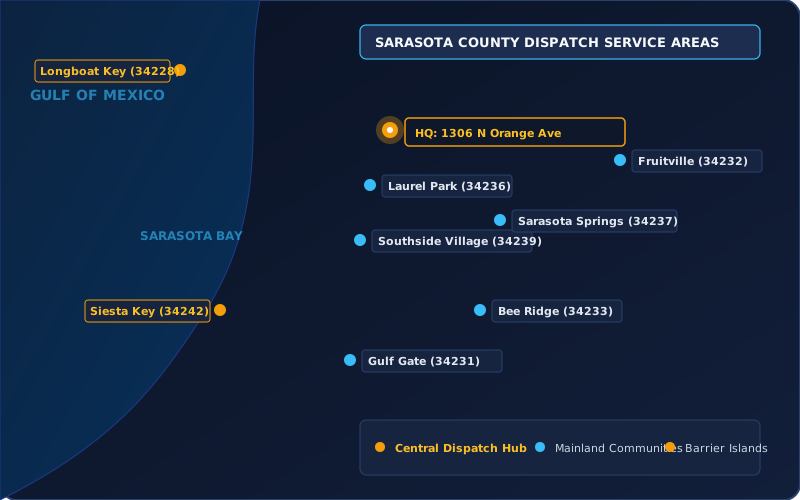
Historic 1920s craftsman bungalows, restored residences, and modern infill townhomes located immediately south of downtown Sarasota.
View Laurel Park Coverage →Established residential community developed primarily in the 1960s and 1970s, renowned for sturdy concrete-block Florida ranches and vibrant commercial corridors.
View Gulf Gate Coverage →Prestigious walkable neighborhood adjacent to Sarasota Memorial Hospital (SMH), featuring a blend of mid-century architecture and substantial contemporary luxury renovations.
View Southside Village Coverage →Central Sarasota suburban corridor encompassing expansive single-family neighborhoods, private swimming pools, and active family communities along Bee Ridge and McIntosh Roads.
View Bee Ridge Coverage →Dynamic East Sarasota district featuring master-planned residential communities, equestrian acreage, detached workshops, and commercial facilities extending toward I-75.
View Fruitville Coverage →World-renowned barrier island featuring luxury gulf-front estates, historic beach cottages, vacation rental condominiums, and private docks along Sarasota Bay.
View Siesta Key Coverage →Exclusive barrier island enclave characterized by pristine multi-story condominium towers, waterfront estates, luxury resort residences, and private yacht slips.
View Longboat Key Coverage →Centrally located, established residential neighborhood between Webber Street and Fruitville Road, characterized by durable mid-century homes and quiet family streets.
View Sarasota Springs Coverage →Every diagnostic inspection, breaker replacement, and electrical panel repair is performed to exacting Florida Building Code and NEC 110.14 safety standards.
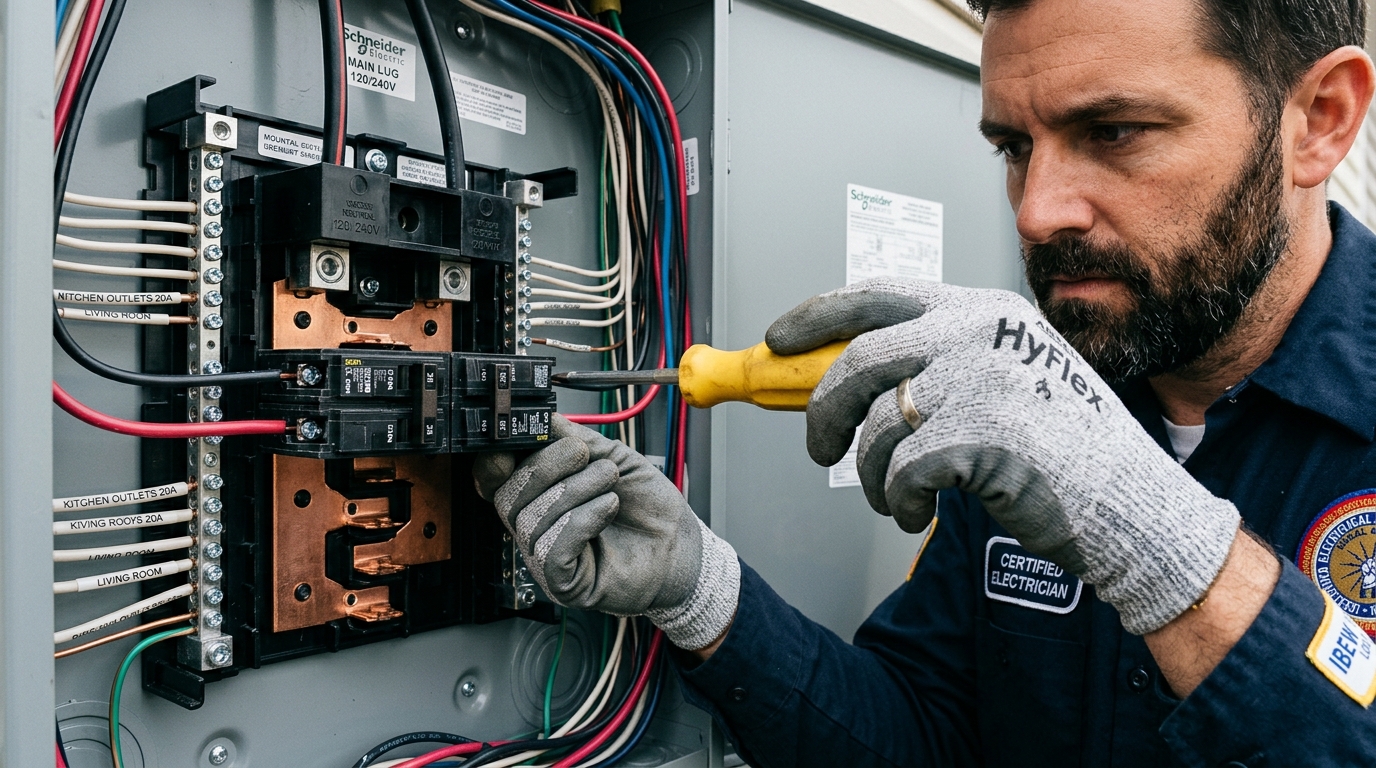
Calibrated torque screwdrivers prevent loose terminal screws, reducing dangerous contact resistance and micro-arcing.
Explore Replacement Services →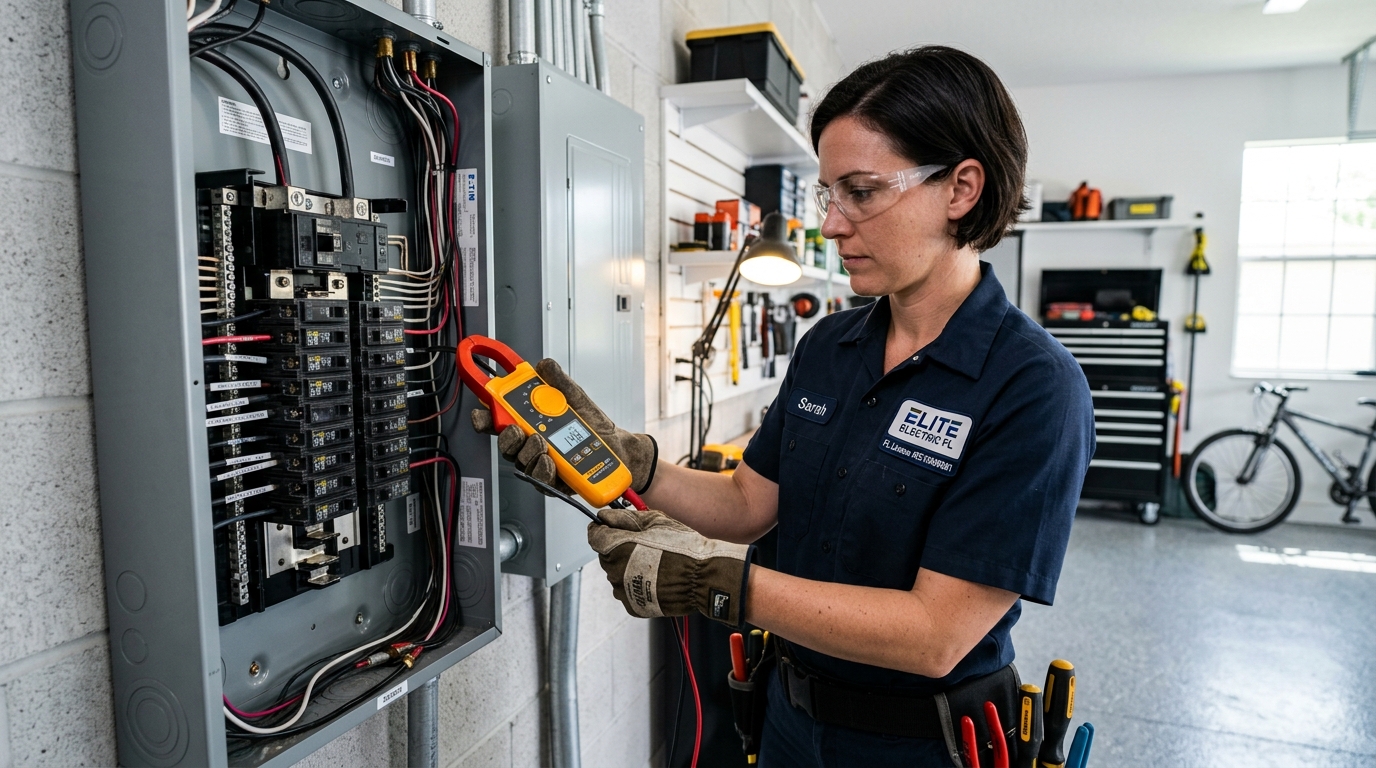
Advanced clamp meter diagnostics verify real-time amp draw against the NEC 80% continuous load safety curve.
Explore Tripping Solutions →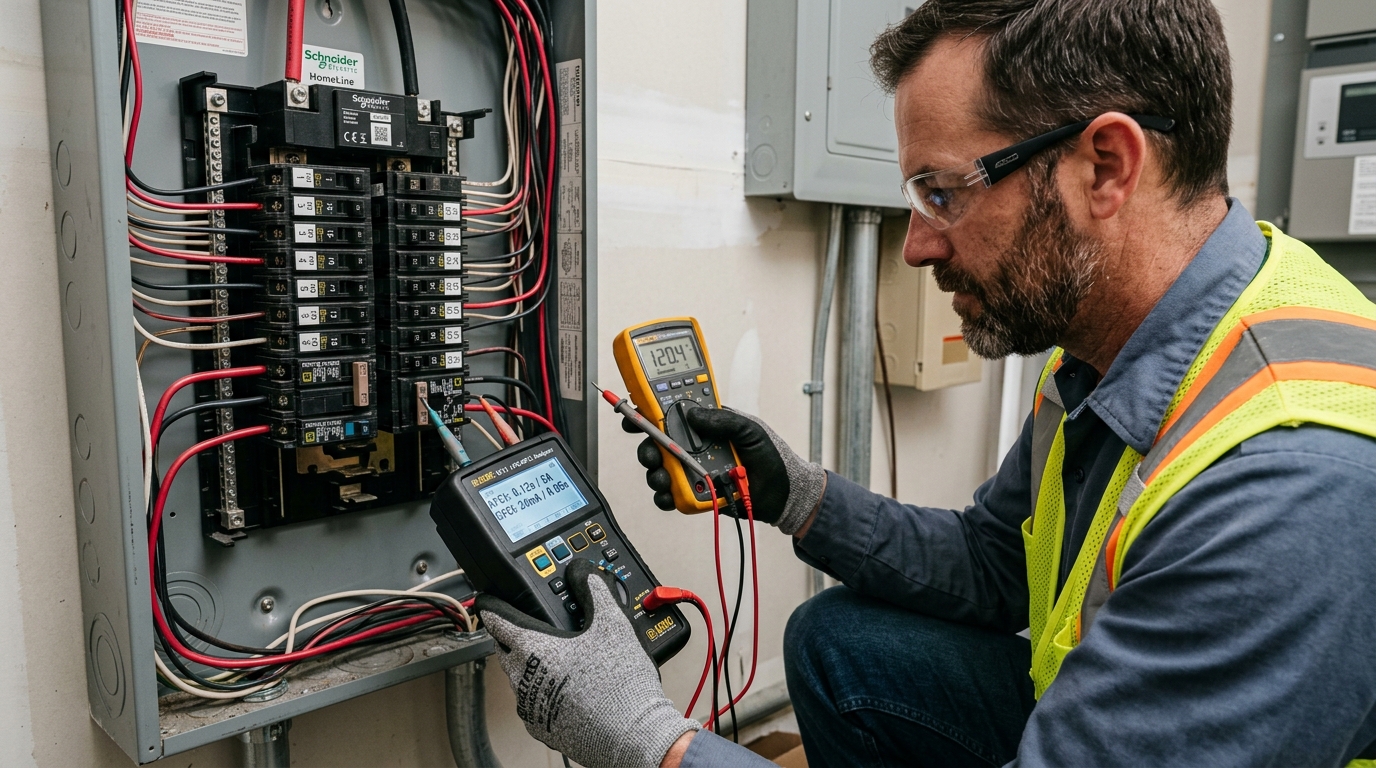
Specialized electronic testers verify arc-fault waveform recognition and 4–6mA ground-fault life safety response.
Explore AFCI / GFCI Testing →Direct answers from our master electricians regarding breaker tripping, panel safety, and diagnostic testing in Sarasota.
Circuit breakers trip primarily due to three reasons: circuit overloads (drawing more amperage than the wire rating), dead short circuits (hot wire touching neutral or ground), or ground faults (current leakage in wet areas). In Florida, heavy central air conditioning startup loads and lightning surges are also frequent triggers.
Yes. A buzzing breaker usually signifies loose terminal screws creating electrical micro-arcs or mechanical vibration caused by an extreme current overload just below the trip threshold. Both conditions generate dangerous heat, degrade panel bus bars, and pose immediate fire hazards.
No. This is a severe National Electrical Code violation. Breakers are strictly sized to protect the gauge of copper wire inside your walls (14 AWG wire is rated for a maximum of 15 amps). Installing a 20-amp breaker on 14-gauge wire allows the wiring to overheat and ignite wall framing without the breaker ever tripping.
A sudden partial power loss usually means one 120V phase leg has dropped from your utility service or your main double-pole breaker has failed. You should immediately shut off heavy 240V appliances (A/C, water heater, stove) to prevent compressor motor burnout from phase back-feeding, and call our emergency team at (323) 996-7938.