Circuit Breaker & Electrical Panel FAQs
Explore detailed technical answers to the most common questions Sarasota homeowners ask regarding breaker tripping, panel maintenance, electrical safety, and Florida building codes.
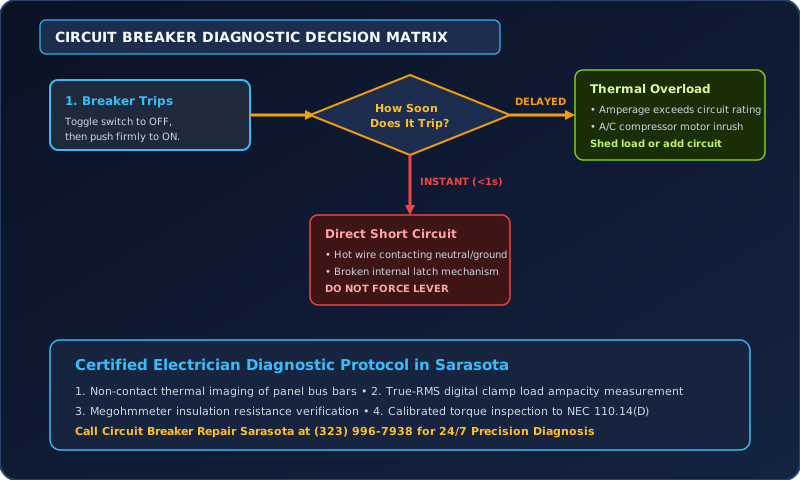
A breaker trips when it detects an overload (too many appliances running on the circuit), a short circuit (direct contact between hot and neutral wires), or a ground fault (current leaking into a ground path or water). Our diagnostic technicians test each circuit segment to isolate the exact cause.
If the breaker handle springs back to center or off immediately when pushed to ON, it indicates an active, unresolved dead short circuit in the wiring, a dangerous ground fault, or a mechanically broken latch spring inside the breaker itself.
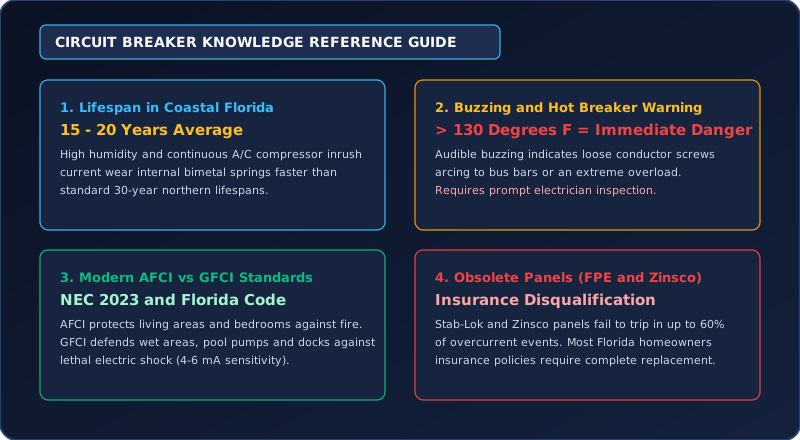
Due to Florida's intense humidity, salt-laden coastal atmosphere, and frequent lightning surges, residential breaker panels should undergo a certified professional safety inspection every 3 to 5 years, or whenever purchasing a home over 20 years old.
AFCI (Arc-Fault Circuit Interrupter) breakers detect hazardous electrical arcing inside wall wiring or cord ends to prevent fires in bedrooms and living spaces. GFCI (Ground-Fault Circuit Interrupter) breakers detect microscopic current leakage to ground to prevent electrocution and shock in wet areas like kitchens, bathrooms, and swimming pools.
Partial power loss typically occurs when one of the two incoming 120V phase legs from Florida Power & Light is lost (due to a blown transformer fuse, damaged underground cable, or corroded service connection), or when a double-pole main panel breaker fails internally.
Circuit breaker replacement is extremely hazardous for DIYers. The main service bus bars inside the panel remain energized with 240 volts of lethal current even with branch breakers off. Slipped tools can cause explosive arc flashes, and installing incompatible breaker brands destroys panel buses and voids homeowner insurance.
Extensive laboratory testing has shown that Federal Pacific Stab-Lok and Zinsco breakers fail to trip under overcurrent conditions in up to 25% to 60% of test cases. They remain energized, melting bus bars and causing documented house fires. Most Florida insurance carriers refuse coverage until these panels are replaced.
While a tiny millisecond dip can occur during compressor startup inrush, significant dimming or prolonged flickering indicates a high-resistance main service lug, a loose neutral bar, or an undersized 100A electrical service struggling under modern high-tonnage heat pump demands.